
Quick Answer
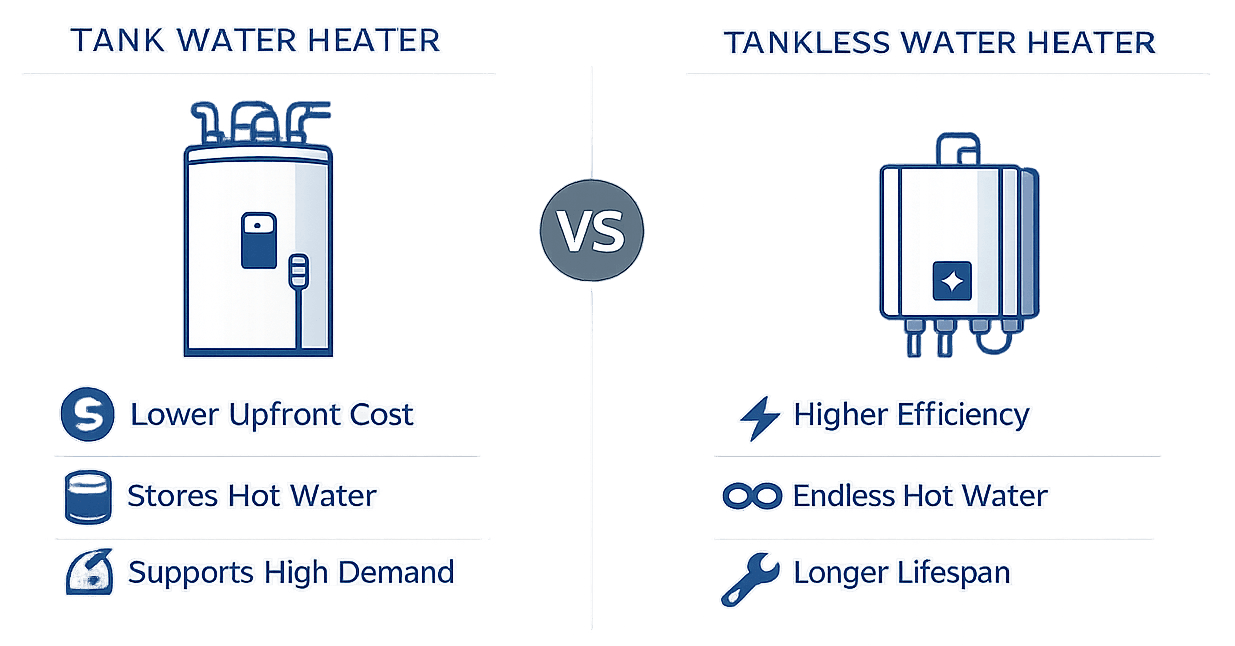
Neither tank nor tankless water heaters are better for every home. Tank models usually cost less up front and work well for many households, while tankless systems often offer better energy efficiency, longer lifespan, and endless hot water within their output limits, but typically cost more to install.
Author
Mike Adkins
Home Service Advisor
Mike Adkins is a Home Service Advisor with HomeField Experts. He helps homeowners understand repair options, contractor qualifications, and practical questions to ask before hiring a home service professional.
How Tank and Tankless Water Heaters Work
A tank water heater stores and heats a set volume of water so it is ready when fixtures call for hot water. A tankless water heater heats water on demand as it flows through the unit.
That basic difference shapes how the two systems compare on efficiency, installation, maintenance, and hot water delivery.
Efficiency Comparison
Tankless water heaters are often considered more efficient because they do not keep a large tank of water heated around the clock. Tank systems can lose heat gradually even when no one is actively using hot water.
Still, efficiency is not just about the appliance itself. Household usage patterns, fuel type, insulation, and installation quality all affect real-world performance.
- Tankless systems reduce standby heat loss
- Tank heaters can be simpler and predictable for standard household demand
- Efficiency benefits are strongest when the system is properly sized and installed
Cost Comparison
Up-Front Cost
Tank water heaters usually cost less to buy and install. They are often the more budget-friendly choice for homeowners replacing a failed unit quickly.
Installation Cost
Tankless systems usually cost more to install because they may need new venting, gas line upgrades, electrical work, drainage changes, or a different wall-mounted layout.
Long-Term Value
Tankless systems can offer longer service life and lower energy waste, but the higher initial cost means the better financial fit depends on how long the homeowner plans to stay and how heavily the home uses hot water.
Maintenance Differences
Both systems need maintenance, but not the same kind. Tank water heaters may need periodic flushing and component checks to help control sediment and corrosion. Tankless water heaters often need regular descaling, especially in homes with hard water.
A homeowner who wants the benefits of a tankless system should also be prepared for regular maintenance to protect performance and lifespan.
Lifespan Comparison
Tankless water heaters often last longer than tank models when they are properly maintained. Traditional tank units usually have a shorter lifespan because the stored water and steel tank are more exposed to long-term internal wear and corrosion.
That does not mean tankless is automatically the better choice. A shorter-lived system that costs much less up front may still be the right fit for some homes.
Hot Water Performance in Real Homes
Tank water heaters are familiar and straightforward for many families, but they can run out of stored hot water during heavy demand. Tankless systems do not store hot water, so they can provide a continuous supply, but only within the flow-rate limits of the unit.
In larger homes or homes with simultaneous showers, laundry, and dishwashing, proper sizing matters more than the system label alone.
Best Option for Different Types of Homes
When a Tank Water Heater May Be Better
- The home needs a lower up-front replacement cost
- The existing setup already supports a standard tank installation
- Hot water demand is predictable and moderate
- The homeowner wants a simpler replacement path
When a Tankless Water Heater May Be Better
- The homeowner wants stronger long-term efficiency
- Space savings matter
- The household wants longer service life potential
- The home can support the venting, fuel, and installation requirements
When to Call a Professional
The best choice depends on the home's fuel setup, venting options, water quality, hot-water demand, and budget. A professional can help determine whether a simple tank replacement, a larger-capacity unit, or a tankless conversion makes the most sense.
Need Local Help?
If you want a local diagnosis or quote, start with the main service page, then explore city-specific guidance where HomeField already has coverage.
Related services homeowners also compare
Frequently Asked Questions
Related Articles
Water Heater Replacement Cost: What Homeowners Should Expect
Plumbing, Drains & Water Heaters
Understand typical water heater installation cost ranges, what drives pricing, and how to compare tank and tankless replacement options.
Read GuideCommon Water Heater Problems: What Homeowners Should Watch For
Plumbing, Drains & Water Heaters
Use this guide to understand common water heater issues, likely causes, and signs that repair or replacement may be needed.
Read GuideWater Heater Maintenance: A Practical Homeowner Checklist
Plumbing, Drains & Water Heaters
Use this homeowner-friendly water heater maintenance checklist to understand yearly tasks, warning signs, and when professional service makes sense.
Read GuideHow Long Water Heaters Last: Tank and Tankless Lifespan Explained
Plumbing, Drains & Water Heaters
Understand average tank and tankless water heater lifespan, what shortens service life, and when replacement becomes the practical choice.
Read GuideNeed Help Choosing Between Tank and Tankless?
HomeField Experts helps homeowners connect with vetted local professionals who can evaluate your home, explain the tradeoffs, and install the right water heater system.